 He came, he chased,slept, sat and purred, and went again.
Thursday, November 13, 2008

Tuesday, November 11, 2008
In Hot Water
A nice article in one of the local (National - how rude!) English language rags about the importance of hot baths for the Japanese.
When my father came to Japan for the first time we took him to see Kenrokuen, a famous garden, in Kanazawa. After that and the 'Ninja Temple' we stayed in a Ryokan hotel for a night. Dad had about 3 minutes in the hotel's public bath before calling it a night.
Why are Japanese baths so hot? Find one writers opinion here.
When my father came to Japan for the first time we took him to see Kenrokuen, a famous garden, in Kanazawa. After that and the 'Ninja Temple' we stayed in a Ryokan hotel for a night. Dad had about 3 minutes in the hotel's public bath before calling it a night.
Why are Japanese baths so hot? Find one writers opinion here.
Godzilla Sings The Blues
 This outside for a change. Dark though.
The south exit of Kanayama station Nagoya is a gathering place for those with instruments to play or dances to dance. I have become to blaze about the experience I suppose. Many of them are terrible to tell the truth.
But it's not just the music, it's the people that stay and listen. Mostly high school girls with their short-skirted bare legs wrapped in Disney motif fleece quilts against the cold. Stay on the fringes.
Monday, November 10, 2008

Sunday, November 09, 2008
Platform

Recently, time out-doors is regularly spent underground in subways and underground shopping malls going from A to B (and back via C if lucky).
Just occasionally, there is a lull or a surge in the crowd, someone steps into a frame they didn't realize existed and 'click' goes the shutter.
Wednesday, October 29, 2008

Sunday, October 19, 2008
Aye, Fisheye!
 This is the Kenko x0.25 180 degree Fisheye Converter. You can find out more details here at the Japan Trends site.
Fisheye lenses are nothing new, but this one is designed to be held in front of or attatched to a compact digital camera or mobile phone camera lens. Below is the lens sitting on top of a Canon Ixy 8 meg (!!!) compact.
 And here is how the converter converts.
It's a great little toy and it only costs 10,000 yen (50 pounds). The trends site mentions nothing about larger sizes, but my friend mentioned that it also comes in medium and large sizes, and thought that the larger size would cover and convert a 50mm lens on an SLR.
October 21st: Sadly these don't seem to be available to cover 50mm lenses. A shame. The three sizes available are still only to suit the smaller compact cameras, but I'm holding out for an adaptor.
Monday, October 13, 2008

Friday, October 10, 2008

Sunday, October 05, 2008
A few clouds in an otherwise blue sky...
 I'm taking a short break from posting. Just a little busy, that's all.
(-0-) v
Wednesday, March 12, 2008
Drawing Lines
 Some similarities indeed. This is an article I never imagined I would write:
At what age do we become adults? In Japan people legally come of age at 20 years old. There are coming of age ceremonies for new adults all over Japan each year.
Now in the U.K as this article explains, former Attorney General Lord Goldsmith has proposed a similar coming of age ceremony for sixteen year olds.
After the tube and bus bombings in London in July 2005, there was a lot of talk about the lack of national identity and cohesion amongst the modern youth of Britain. This proposal is perhaps a predictable institutional reaction to such sentiment, but is it without merit?
Aside from the affirmation of national identity comes the question of legal responsibility. As this editorial explains, the legal age of adulthood in Japan is a current hot topic. Should the legal age be lowered to 18?
There is the possibility of big change in both countries. There is also the proposed introduction of a registration card for foreign residents in The U.K which would mirror the much maligned 'Gaijin Card' system in Japan. Another similarity that I never imagined commenting on.
Lines are being re-drawn, with both countries trying to cope with internal changes.
Monday, March 10, 2008

Tuesday, March 04, 2008
All White Again

 Last weekend we spent two nights in the holiday home of a friend who asked me to take some illustrative winter shots of the home for his brochure.
The house is in Hakuba, in Nigata prefecture. The rear windows pictured in the second photo look out onto the entrance to the ski slope and the base of the ski lift. A prime location with underfloor heating (very comfy).
Sadly, no skiing for me (not that I'm any good, I have only been twice). The long drive and the two day weekend meant that we only had a day and a half to get the inside and outside pictures. With more people than just my group staying, it meant a constant flow of bodies in and out of the house which made trying to get a shot of the interior minus cast off ski wear and tired bodies very difficult. There was also the problem of the local Sake being very good!
Finaly a series of 12 shots made the grade. Less from the outside as the wind and heavy snow even closed the ski lift on the final day. It was good to get out of the city though, and see some mountains close up. I'm told that the skiing was good too.
Tuesday, February 26, 2008

Friday, February 22, 2008
The Modern Japanese Woman
 The front cover illustration of "Goodbye Madame Butterfly" courtesy of Pingmag.
This month the Tokyo based online magazine Ping Mag features an interview here with Japanese author Sumie Kawakami. In an unusual deviation from their regular topic of design, the article instead focuses on the relationship between sex and marriage in Japan.
Kawakami’s latest book entitled “Goodbye Madam Butterfly: Sex, Marriage and the Modern Japanese Woman”contains accounts of the sex lives of eleven Japanese women.
While the term ‘modern’ is used in the title, Kawakami's interview seems to point to a situation which for the women themselves seems to be anything but. Having not read the book I am unable to comment further, but Kawakami seems to suggest that the lot of the Japanese woman could only be modern in the sense of being current.
It is an interesting interview that relates the lack of sexual activity after marriage to the long working hours of the Japanese business man, and the sense of identity that Kawakami says Japanese society ‘demands’ of Japanese couples after having children.
Take ten minutes to read the article for a brief introduction to sexless Japan.
Kawakami’s latest book entitled “Goodbye Madam Butterfly: Sex, Marriage and the Modern Japanese Woman”contains accounts of the sex lives of eleven Japanese women.
While the term ‘modern’ is used in the title, Kawakami's interview seems to point to a situation which for the women themselves seems to be anything but. Having not read the book I am unable to comment further, but Kawakami seems to suggest that the lot of the Japanese woman could only be modern in the sense of being current.
It is an interesting interview that relates the lack of sexual activity after marriage to the long working hours of the Japanese business man, and the sense of identity that Kawakami says Japanese society ‘demands’ of Japanese couples after having children.
Take ten minutes to read the article for a brief introduction to sexless Japan.
Wednesday, February 20, 2008
Men at work
 A priest inspecting drainage repair work today outside Shiogama Shrine in Yagoto, Nagoya.
It's nearing the end of the financial year in Japan. The most noticable signs of this are the road works.
Each local government department recieves a budget from the central government. The size of the budget depends on the spending from the previous year. If spending was less than the alloted amount in the previous year, the budget for the next year will decrease.
This system encourages departments to use their entire budget, and so in the run up to the end of the financial year, only slightly worn roads are resurfaced, barely wetted drainage is remade and the full budget is guaranteed for another year.

Wednesday, February 13, 2008

Sunday, February 10, 2008
Photo Words
When searching for a definition of the term "pot life", I found a link to Photo Guide's "Photo Words" section. Wish I had found it a couple of years ago.
"PhotoWords aims to help English-speaking photographers learn basic Japanese words related to photography. "
(introductory remarks from Photoguide Japan Photowords page)
Translations are written in both Japanese and a romanized version. It brings together on one site the language of the consumer and the studio photographer, listing part names, tool names, and slang.
Word lists are arranged in alphabetical order and include useful remarks about the Japanese by the author of Photoguide Japan, Philbert Ono.
All White


Yesterday saw the heaviest snowfall in Aichi in at least a couple of years. It has all but gone now, with the snowfall turning to light rain in the afternoon and the sunshine melting the ice today.
I took a walk to Shiratori Park in the afternoon. In the last two hours before the drizzle, the snow fell heavily. Tall buildings turned to grey in the distance and after leaving the main road, the only sound was from the parks and side roads where children played.
As I had imagined, the park was busy with Rotographers, with only the occasional younger visitor. Shiratori park is one of Nagoya's Japanese gardens, and a focus for those who enjoy observing the changing of the seasons.
Wednesday, February 06, 2008

Saturday, January 12, 2008
Local Brew

At the end of the year come the end of year parties, and at the beginning of the year the new year parties. For todays Shin Nen Kai (新年会 = New Year Gathering) a friend arranged a Sake tasting for us with four different types of Nihonshu from three different regions of Japan.
Lucky me!
Wednesday, January 09, 2008

Wednesday, January 02, 2008


Thursday, December 27, 2007
My Sticks
For christmas dinner this year Mitz invited a group of friends and asked me to cook a chicken (I went one better and did a turkey as well, but used too much flour in the gravy).
After photographing some chopsticks the other week for a presentation set brochure, I had an idea to continue the theme and asked our friends to bring the chopsticks they use at home to christmas dinner. My plan was simply to snap them holding their chopsticks as they usually do.
There is a correct way to hold chopsticks of course, but like the knife and fork there are many other ways in use. There is also a huge variety of designs and everybodies hands are different. I thought it would make an interesting series.
On the day however I found myself with so little free time as to be un-amusing, despite getting up at 5:30 in the morning, so the final pics shot on the run are far from satisfactory. The difference between the exposure required for the sticks and the hand, and the resulting effect on the background light will take a little more fine tuning and time for each shot, but for the moment the following four snaps should give you an idea of what I am heading for.


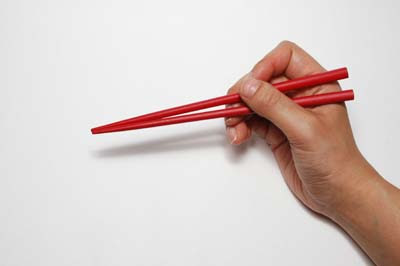
After photographing some chopsticks the other week for a presentation set brochure, I had an idea to continue the theme and asked our friends to bring the chopsticks they use at home to christmas dinner. My plan was simply to snap them holding their chopsticks as they usually do.
There is a correct way to hold chopsticks of course, but like the knife and fork there are many other ways in use. There is also a huge variety of designs and everybodies hands are different. I thought it would make an interesting series.
On the day however I found myself with so little free time as to be un-amusing, despite getting up at 5:30 in the morning, so the final pics shot on the run are far from satisfactory. The difference between the exposure required for the sticks and the hand, and the resulting effect on the background light will take a little more fine tuning and time for each shot, but for the moment the following four snaps should give you an idea of what I am heading for.


Monday, December 24, 2007

Saturday, December 15, 2007


Thursday, December 13, 2007

Nagoya does Okinawa
As you may or may not know I live in Nagoya, a city situated in the middle of the Japanese mainland. I do not live in Okinawa. There is a surprisingly large amount of people in Nagoya who are not from Okinawa and it has often been noted that with it’s conservative character, Nagoya is very unlike Okinawa (unless you count the modern architecture which is the same everywhere).
 Eisa began with the Okinawan hand dancing style. A distinctive and slightly batty looking dance, but certainly less daft than the round and round dance done to the theme of Top Gun.
With the improvement of the local economy in Okinawa after the war came the drums. The Eisa moves at a fast pace and encourages people to join in. It is a style that has proven to be immensely popular on the mainland, and in the same way that tribal drumming took off back home, the Eisa encourages 一体感 (いったいかん), a sense of common identity. In this sense it is not unlike a Bon-Odori on uppers.
 The spread of Eisa is probably due to the spread of Okinawans into the mainland workforce after Okinawa was subsumed into “Japan”. Like Irish folk music in the U.K it seems to attract and involve people from all walks. It is a mark of the tenacity of the Okinawan people that, like the Irish, they suffered the persecution and prejudice of the mainland but won through with their positive and danceable music.
  The colder winter months are traditionally off periods for the Eisa groups as they are outdoor festival types, Okinawa being the semi-tropical region that it is. Sadly, the pop group Orange Range has yet to take a break of any significance, but one lives in hope.
Despite not being Okinawa, the number of Okinawan dance groups and music clubs in this region is astounding. The style is prominent enough to be included into the Nagoya parade each year, it has it’s own events throughout the prefecture and a network of supporting committees run by volunteers with a level of dedication that would shame most governments. What is it about the music of Okinawa that provokes this kind of involvement?
Okinawan music can be simplified into three groups. Minyo (folk music), Eisa (festival music) and pop music, with famous solo and group artists such as Natsukawa Rimi and Orange Range.
The reservoir of Okinawan Minyo is added to at the staggering rate of three to four hundered new songs a year. Try to find any other region in Japan with a folk scene like that.
The reservoir of Okinawan Minyo is added to at the staggering rate of three to four hundered new songs a year. Try to find any other region in Japan with a folk scene like that.
The Jamisen, the Okinawan shamisen, is shorter than it’s mainland counterpart and covered with snake skin rather than cat skin. During the war, people used whatever tins and wire came to hand to make their Jamisen and continued to make music.
The singing style is melodic, and singers modulate their voices to accompany the sanshin. Songs cover everything from being a taxi driver to lost love. They are used as a lullaby for the children and some have all the moral content of a fable. At their roots they are of course a social tool, but as the popularity of Okinawan Minyo has increased, it has become a much appreciated art form, with tickets for the live events priced accordingly.
Eisa began with the Okinawan hand dancing style. A distinctive and slightly batty looking dance, but certainly less daft than the round and round dance done to the theme of Top Gun.With the improvement of the local economy in Okinawa after the war came the drums. The Eisa moves at a fast pace and encourages people to join in. It is a style that has proven to be immensely popular on the mainland, and in the same way that tribal drumming took off back home, the Eisa encourages 一体感 (いったいかん), a sense of common identity. In this sense it is not unlike a Bon-Odori on uppers.
The spread of Eisa is probably due to the spread of Okinawans into the mainland workforce after Okinawa was subsumed into “Japan”. Like Irish folk music in the U.K it seems to attract and involve people from all walks. It is a mark of the tenacity of the Okinawan people that, like the Irish, they suffered the persecution and prejudice of the mainland but won through with their positive and danceable music. The colder winter months are traditionally off periods for the Eisa groups as they are outdoor festival types, Okinawa being the semi-tropical region that it is. Sadly, the pop group Orange Range has yet to take a break of any significance, but one lives in hope.
Sunday, December 09, 2007


Subscribe to:
Posts (Atom)

